
Cupping Therapy at K-Flow Therapy
Controlled decompression to support tissue movement and recovery
What Cupping Therapy Is
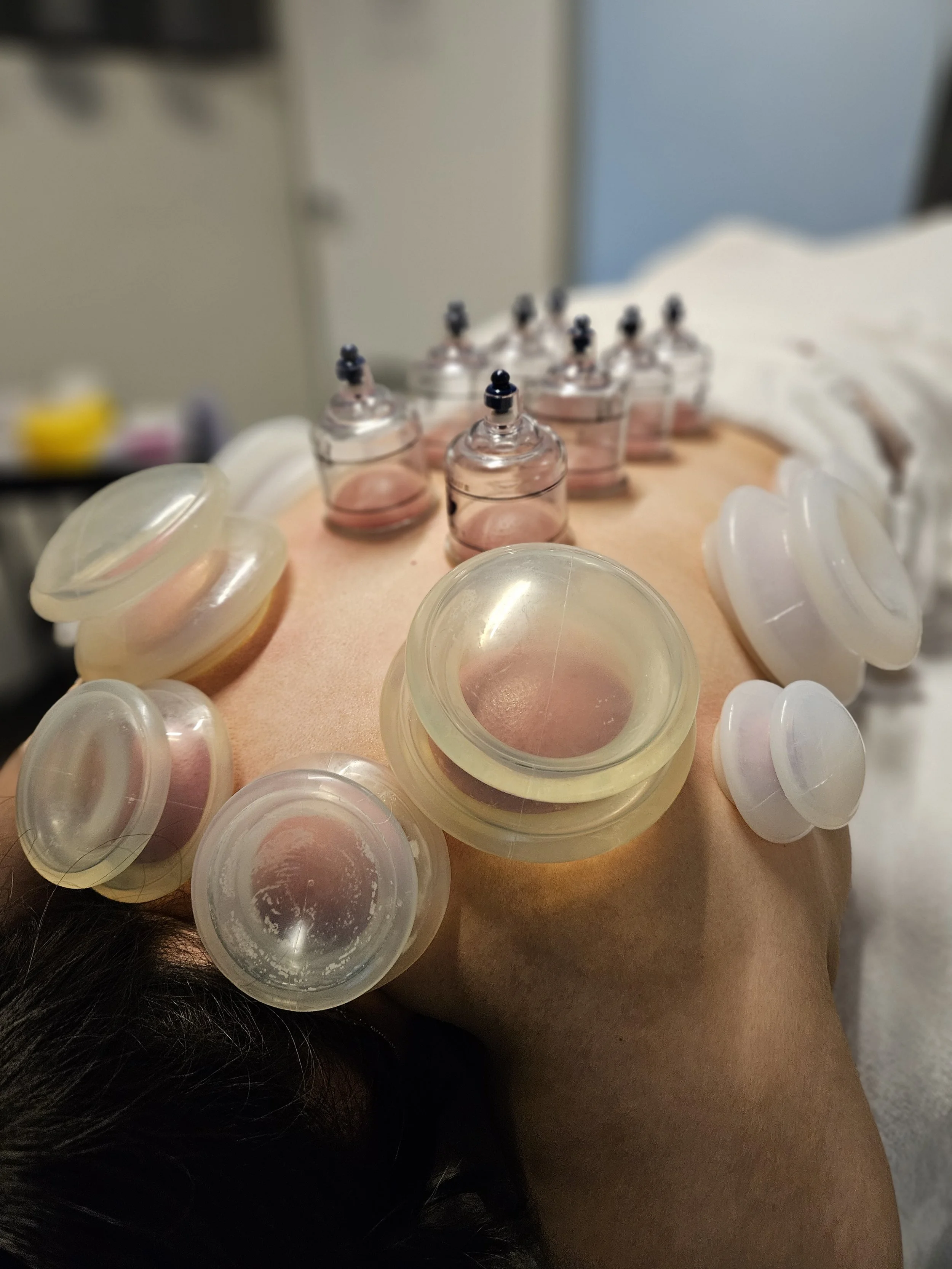
Cupping therapy is a soft tissue technique that uses gentle negative pressure to lift and decompress the skin and underlying tissue.
At K-Flow Therapy, cupping is not used aggressively and is not applied with the intention of forcing change or leaving marks for effect. Instead, it is used to support tissue movement, circulation, and sensory input, particularly in areas that feel restricted, compressed, or overloaded.
The focus is on controlled, purposeful decompression, not intensity.
Silicone and Plastic Cupping – How I Choose
At K-Flow Therapy, I use both silicone and plastic cups, selecting the type based on the tissue presentation, treatment goal, and client comfort.
Silicone Cups
Silicone cups allow for greater flexibility and control during treatment.
They are commonly used when:
tissue is sensitive or easily guarded
dynamic cupping with movement is preferred
a gentler, more adaptive approach is required
cupping is being blended closely with hands-on techniques
Silicone cups are especially useful for reducing guarding and supporting smooth tissue glide without excessive suction.
Plastic Cups
Plastic cups provide more stable and consistent suction and are typically used for short, targeted applications.
They may be chosen when:
a more localised decompressive effect is required
tissue tolerance is higher
static cupping is appropriate for the treatment goal
Plastic cups are applied conservatively and for limited durations, always based on tissue response.
The choice of cup type is always clinical, not preference-based, and adjusted throughout the session as needed.
Training and Clinical Background
My approach to cupping therapy is grounded in both formal education and clinical training.
I hold a Diploma of Remedial Massage Therapy, where cupping was taught as part of evidence-informed soft tissue management and rehabilitation principles.
I also hold certification in RockPods® Cupping Therapy through RockTape, which focuses on safe, movement-based cupping approaches commonly used in sports and rehabilitation settings.
This ensures cupping is applied professionally, safely, and only when clinically appropriate.
My Clinical View on Cupping
From a clinical perspective, cupping works best as a decompression tool, not as a corrective force.
By gently lifting the tissue, cupping may help:
reduce compressive load on sensitive areas
improve local circulation
allow tissues to move more freely relative to one another
provide non-threatening sensory input to the nervous system
I often use cupping when tissues feel compressed rather than shortened, or when direct pressure increases guarding instead of improving movement.
It is particularly useful during recovery phases, deload periods, or when the goal is to calm tissue rather than challenge it.
When Cupping Is Commonly Used
Cupping may be considered when assessment shows:
muscle tightness with a heavy or compressed sensation
post-training or post-competition soreness
poor tolerance to deep pressure
load-related stiffness or fatigue
reduced tissue glide
Common treatment areas include:
upper back and shoulders
hips and glutes
calves and hamstrings
lower back (when appropriate)
How Cupping Is Used During Treatment
Cupping is never used in isolation.
When appropriate, it may be combined with:
remedial or sports massage
myofascial release
IASTM
dry needling
gentle movement or activation exercises
Cups may be used statically for short periods or dynamically while the tissue is moved, depending on the goal of the session and tissue response.
What It Feels Like
Cupping usually feels like:
a pulling or lifting sensation
pressure without compression
warmth or lightness after removal
Most clients find the sensation comfortable and different from deep pressure techniques.
Skin Marking, Consent, and Client Choice
Depending on tissue condition, circulation, and sensitivity, cupping may sometimes leave temporary skin markings.
These markings are not bruises and do not indicate tissue damage. They are a normal response to negative pressure and changes in local circulation, and typically fade within a few days.
For this reason, cupping is always discussed before treatment.
Before applying cups, I will:
explain why cupping may be useful for your presentation
discuss the possibility of temporary skin markings
select cup type and suction based on your comfort and preferences
Cupping is never applied without your consent.
If you prefer not to receive cupping for any reason, it will not be used and alternative techniques will be selected instead.
Client comfort, understanding, and choice always come first.
Is Cupping Therapy Right for You?
Cupping may be appropriate if:
deep pressure feels uncomfortable or counterproductive
your muscles feel heavy, compressed, or slow to recover
you are in a recovery or deload phase
you want a decompressive alternative to deep tissue work
During your session, I will assess whether cupping is appropriate for your presentation and explain its role in your treatment.