
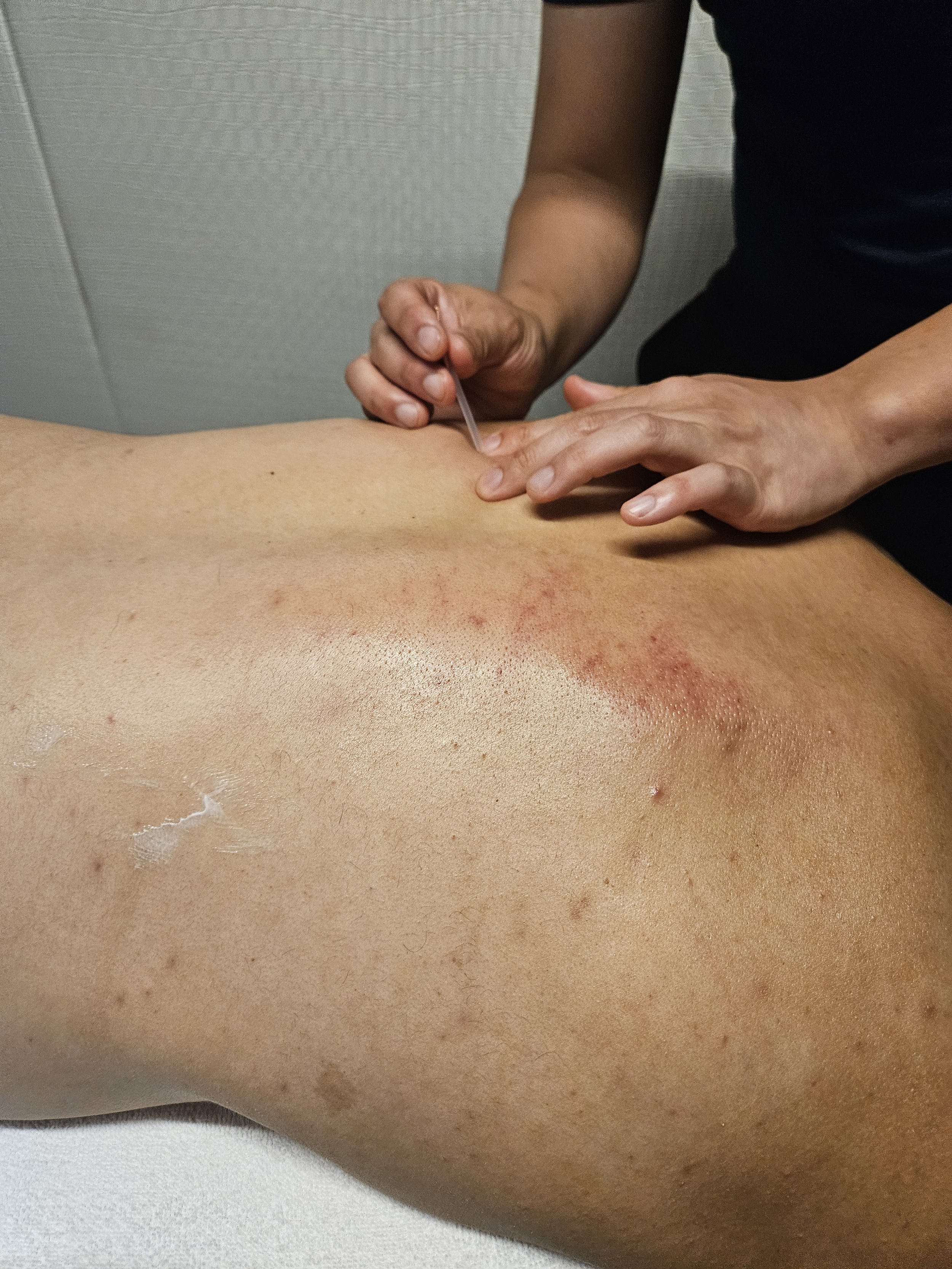
Dry Needling at K-Flow Therapy
Performed by Sam – Advanced Dry Needling Practitioner
What Dry Needling Is
Dry needling is a precise technique used to influence neuromuscular tone and sensitivity in overloaded or fatigued muscles.
It can help reduce deep tension, improve mobility, and support better movement quality, particularly for people who train regularly or spend long hours sitting.
Dry needling is used as part of a broader treatment approach, not as a standalone solution. It is applied only when it is likely to support your movement and recovery.
Performed by a Fully Trained and Insured Practitioner
All dry needling at K-Flow Therapy is performed by Sam, a fully insured remedial massage therapist with formal qualifications in advanced dry needling.
Sam has completed comprehensive training through:
Advanced Dry Needling Certification – CPD Health Courses
This qualification is renewed every three years and supported by ongoing safety education and updated clinical modules.Superficial Dry Needling Training under Ian Selvarajoo
Worked at Good Health Group Clinic, with a strong focus on safe and effective superficial needling techniques for the neck, shoulders, hips, and lower back.
This combination of training ensures dry needling is delivered safely, professionally, and only when clinically appropriate.
Why I Use It
Some muscles remain in a state of protective tension and do not fully settle with massage alone.
Dry needling provides a specific neuromuscular stimulus that can help reduce guarding and allow the tissue to reset.
I typically consider dry needling when movement assessment shows:
restricted range of motion
deep, stubborn tightness
neuromuscular fatigue
compensatory movement patterns from training
overuse or repetitive load patterns
Dry Needling and the Muscle Spindle Reflex
For active individuals and athletes, dry needling may influence the muscle spindle reflex, the system responsible for sensing muscle stretch and regulating muscle tone.
When a muscle is overloaded or fatigued, the spindle can become hypersensitive, causing the muscle to remain unnecessarily tight.
Dry needling may help by:
reducing excessive spindle sensitivity
calming protective reflex activity
improving the muscle’s ability to contract and relax effectively
supporting smoother, more efficient movement patterns
While research in this area is still evolving, these responses are commonly observed clinically in active individuals experiencing persistent muscle guarding.
In simple terms, if a muscle feels like it is “always switched on,” dry needling can help reduce that state so movement feels freer and more controlled. This is why many runners, lifters, cyclists, footballers, and court-sport athletes find it useful during heavy training periods.
How It Helps
Improves mobility
Reduces muscle guarding
Releases deep, persistent tension
Supports recovery during high training loads
Improves movement quality for active individuals
Assists with chronic tightness related to posture or load
What It Feels Like
During treatment, you may feel a brief muscle twitch, dull pressure, or a heavy sensation in the area being treated.
Most people describe it as unusual but relieving.
Temporary soreness for 24-48 hours is common and typically settles on its own.
How I Use It During Treatment
Dry needling is not used routinely and is never treated as a quick fix.
I apply it only when it is likely to improve movement and pair it with other appropriate techniques such as:
remedial or sports massage
myofascial release
IASTM
cupping
simple corrective exercises
No substances are injected, and dry needling does not involve medication or injection therapy.
This integrated approach helps ensure improvements hold and reduces the likelihood of symptoms returning.
When Dry Needling Is Not Used
Dry needling is not applied when other manual techniques are sufficient, when it is unlikely to benefit your presentation, or when contraindications are present.
It is always optional and fully explained before use.
Safety
Dry needling at K-Flow Therapy is performed by a practitioner who is:
clinically trained in advanced and superficial dry needling
fully insured and professionally accredited
up to date with CPD Health safety standards
experienced working with athletes and active individuals
Your safety and comfort are always the priority.
Is Dry Needling Right For You?
If you’re experiencing recurring tightness, persistent muscle guarding, or movement that feels restricted or “stuck,” dry needling may be an appropriate option.
During your session, I will assess your movement patterns and explain whether dry needling is suitable for your condition.