
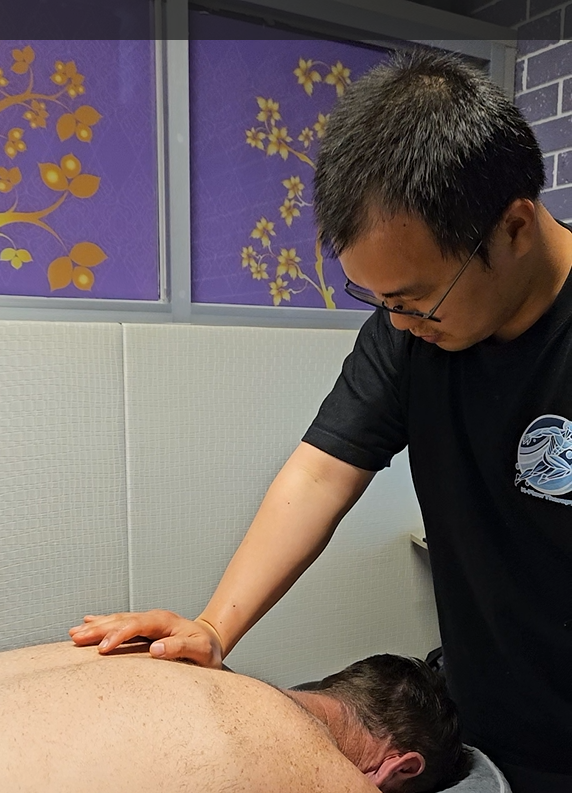
Myofascial Release (MFR) at K-Flow Therapy
Slow, low-load work that allows the body to let go
What Myofascial Release (MFR) Is
Myofascial Release (MFR) is a low-load, sustained manual therapy approach that allows the body to gradually reduce protective tension on its own.
Unlike techniques that rely on clear mechanical force or strong sensory input, MFR intentionally uses minimal pressure and minimal stimulation.
The aim is not to provoke change, but to create enough safety and stillness for the nervous system and connective tissue to down-regulate naturally.
At K-Flow Therapy, MFR is used when tension appears to be driven more by protection and over-guarding than by a true mechanical restriction.
How MFR Is Different From Other Soft Tissue Techniques
MFR is not about:
breaking tissue down
chasing tight spots
increasing intensity to “force” a release
creating a strong sensory response
Instead, MFR works by:
reducing background nervous system tone
allowing sustained contact without triggering resistance
giving connective tissue time to adapt without threat
If techniques like IASTM or dry needling provide a clear input,
MFR provides space.
My Clinical View on MFR
Clinically, MFR is most effective when the body is over-protected rather than under-stimulated.
This is often seen in clients who:
tense up easily during treatment
flare after deep or aggressive work
feel globally tight rather than locally restricted
experience long-standing or stress-related tension
struggle to fully relax, even at rest
In these cases, adding more force often increases guarding.
MFR allows the system to settle first, before introducing movement or load.
I use MFR to:
reduce overall nervous system arousal
soften widespread, non-specific tension
improve tolerance to later treatment or exercise
establish a calmer baseline before progressing care
When MFR Is Commonly Used
MFR may be appropriate when assessment shows:
whole-body stiffness rather than focal tightness
tissue that feels guarded but not dense
poor tolerance to deep pressure
symptoms that fluctuate with stress or fatigue
difficulty “switching off” physically
It is commonly used with:
highly stressed clients
people with persistent or recurrent pain patterns
early phases of rehabilitation
recovery-focused sessions
clients who need a gentle clinical entry point
How MFR Is Used During Treatment
MFR may be used:
at the start of a session to down-regulate the system
between stronger techniques to prevent overload
as the primary focus during recovery phases
When appropriate, it may later be paired with:
movement-based work
gentle activation
remedial or sports massage
IASTM or dry needling once the system is ready
With MFR, timing matters more than technique.
What It Feels Like
MFR is typically:
slow
quiet
subtle
Pressure is sustained rather than moving quickly.
Many clients describe a gradual sense of softening, warmth, or easing rather than an immediate release.
Because changes are subtle, the effects are often noticed after the session, not during it.
How I Learned and Apply Myofascial Release
My approach to MFR is grounded in both formal training and clinical mentorship.
I hold a Diploma of Remedial Massage Therapy, which provided a strong foundation in anatomy, physiology, and evidence-based soft tissue care. Over time, my clinical focus shifted toward understanding how the body responds to threat, safety, and load, rather than force alone.
A significant part of how I practise MFR today was shaped during my time working at Nexus Bodywork Clinic, where I was mentored by fascia-focused therapist Blake Reyment.
Through this mentorship, I developed a deeper appreciation for:
slow, sustained contact rather than repeated pressure
reading tissue response instead of chasing techniques
recognising when not to push for change
allowing the body to down-regulate before progressing treatment
This experience strongly influences how I use MFR today, not as something I do to the body, but as a way of creating the conditions for the body to let go on its own.
Is Myofascial Release Right for You?
MFR may be appropriate if:
your body reacts poorly to strong techniques
tension feels constant but difficult to pinpoint
symptoms flare easily after treatment
you need your system to calm before progressing
During your session, I will assess whether MFR is the most appropriate starting point, or whether a more direct approach is suitable.