
Does Treatment Really Need to Hurt to Work?
Understanding Pain, the Brain, and Why Controlled Discomfort Can Help
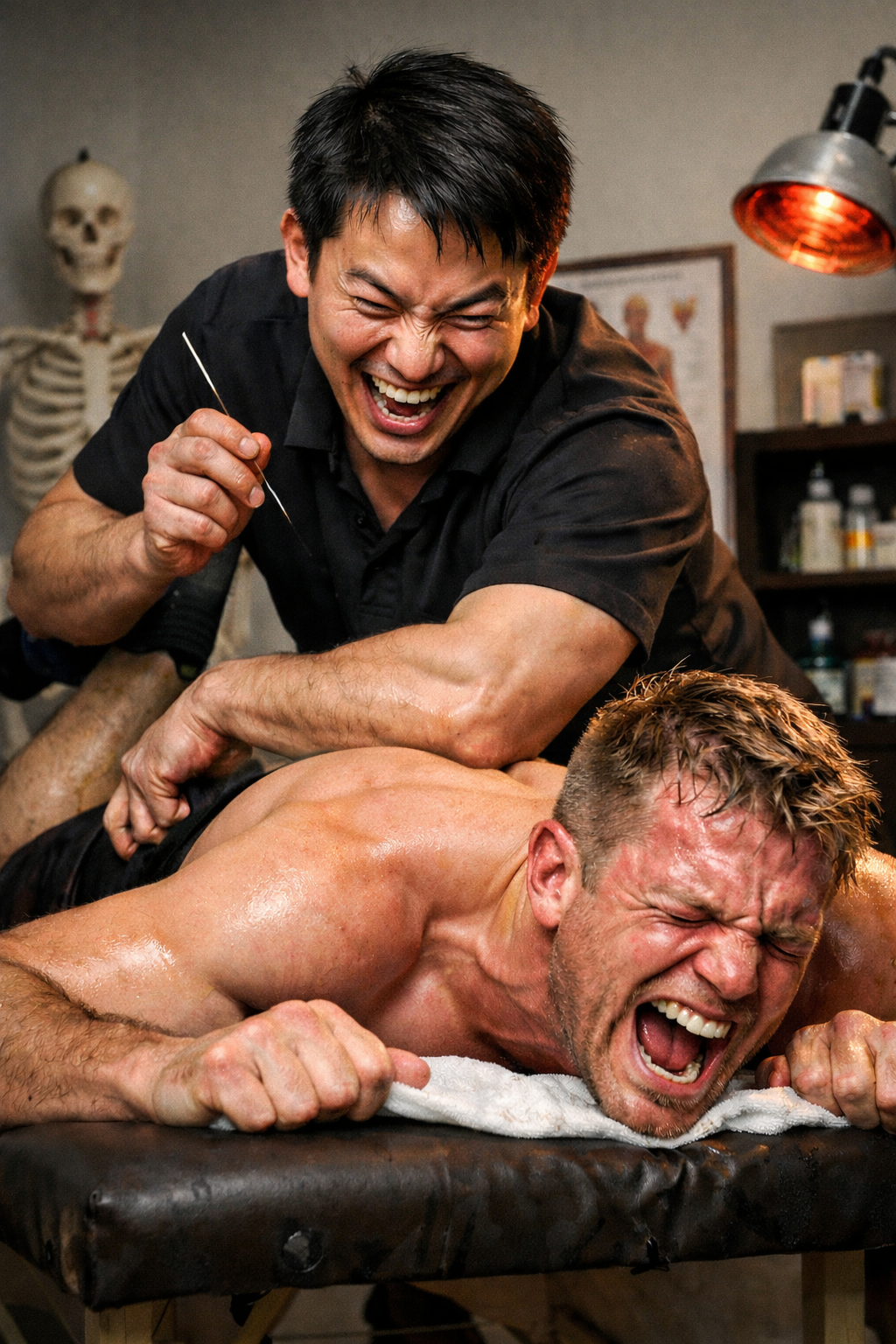
Spend enough time treating people and a clear pattern starts to emerge.
Not just in injuries or symptoms, but in expectations.
Many clients walk into K-Flow Therapy already believing the same thing, if treatment doesn’t hurt, it probably isn’t working.
This belief shows up across all age groups and activity levels, from athletes to desk workers. And while it’s understandable, it’s often an oversimplification of how pain and recovery actually work.
A quick clarification before we go further
I’m not a physiotherapist.
If there’s an acute injury, nerve symptoms, or anything that could suggest structural damage, I’ll always recommend seeing a GP or physiotherapist first. Proper assessment and diagnosis matter, especially early on.
The people who usually end up in my room in Werribee are those who’ve already done that step.
“They said the scans look fine… but it still doesn’t feel right”
This is one of the most common conversations I have.
Imaging shows no major issue.
Strength tests look okay.
Yet pain, stiffness, or restriction is still there.
Movement feels guarded.
Certain ranges don’t feel safe.
The body hesitates.
In many of these cases, the problem isn’t damaged tissue. It’s how the brain and nervous system are interpreting that area.
Pain doesn’t always mean damage
From a clinical perspective, a large number of ongoing or repetitive strain issues don’t behave like injuries.
Instead, they behave like protective responses.
The nervous system decides a certain area might be risky and starts turning up sensitivity. Muscles tighten, range of motion reduces, and pain appears, even when the tissue itself is healthy.
This kind of pain is less about damage and more about over-protection.
The brain has essentially drawn a boundary and is trying to keep you inside it.
Why controlled discomfort can help re-educate the brain
This is where discomfort, when used carefully, can be useful.
I do use discomfort in treatment, including hands-on work and Dry Needling, but not to “push through pain” or test tolerance.
The goal is different.
By applying a controlled, predictable stimulus, the nervous system receives new information:
This area can tolerate load
This sensation isn’t dangerous
Movement beyond the current boundary is still safe
For that to work, the stimulus must stay within a range the client can manage. We communicate constantly. The body stays relaxed, not braced.
When discomfort stays controllable, it stops acting like a threat and starts acting like feedback. That’s when the brain begins to update its rules.
Dry Needling as a nervous system input
I approach Dry Needling the same way.
It’s not about how much pain someone can endure. It’s about delivering a precise stimulus that challenges protective patterns without overwhelming the system.
When used appropriately, Dry Needling can be an effective way to interrupt persistent guarding and help the brain reassess what’s actually dangerous versus what’s just unfamiliar.
Most clients already believe in “no pain, no gain”
Interestingly, it’s often clients who push hardest for intensity.
“You can go harder.”
“I’m fine, I can take it.”
“It has to hurt to work, right?”
That mindset is common, and it makes sense. Strong sensation feels productive.
But pain only helps if it leads to change. If the nervous system feels threatened, it doesn’t adapt, it tightens its grip.
Pain without control usually reinforces the very patterns we’re trying to calm down.
Why I don’t chase pain, but I don’t avoid sensation either
I don’t believe in no pain, no gain.
At the same time, I don’t believe that avoiding sensation altogether is always helpful.
The question isn’t whether something hurts.
It’s whether the stimulus is:
controllable
predictable
followed by improved movement
When those boxes are ticked, the sensation becomes part of the learning process rather than something the body needs to defend against.
Movement matters after treatment
This is also why I’m cautious with advice like “don’t use it at all”.
In some cases, rest is appropriate. But complete avoidance can reinforce the idea that an area is fragile.
Instead, I usually encourage gentle, low-intensity movement within the range that’s improved during treatment. Using that range helps lock in the message that movement is safe again.
That’s how desensitisation actually sticks.
Not every approach suits every person
I’ll sometimes joke with clients:
“If this level of sensation isn’t your thing, our sister clinic Sriri Thai Massage at the next door does an excellent relaxation massage.”
It’s light-hearted, but true. Different people need different approaches, and that’s okay.
So, does treatment really need to hurt to work?
Not exactly.
But in certain cases, the right kind of discomfort can help re-educate the brain, reduce unnecessary protection, and restore confidence in movement.
The aim isn’t to push through pain.
It’s to help the nervous system calm down, reassess, and move more freely again.
That’s the approach I continue to use here in K-Flow Therapy Werribee, working with the brain, not against it.
