
Why I Get Angry When People Ask for Manual Lymphatic Drainage
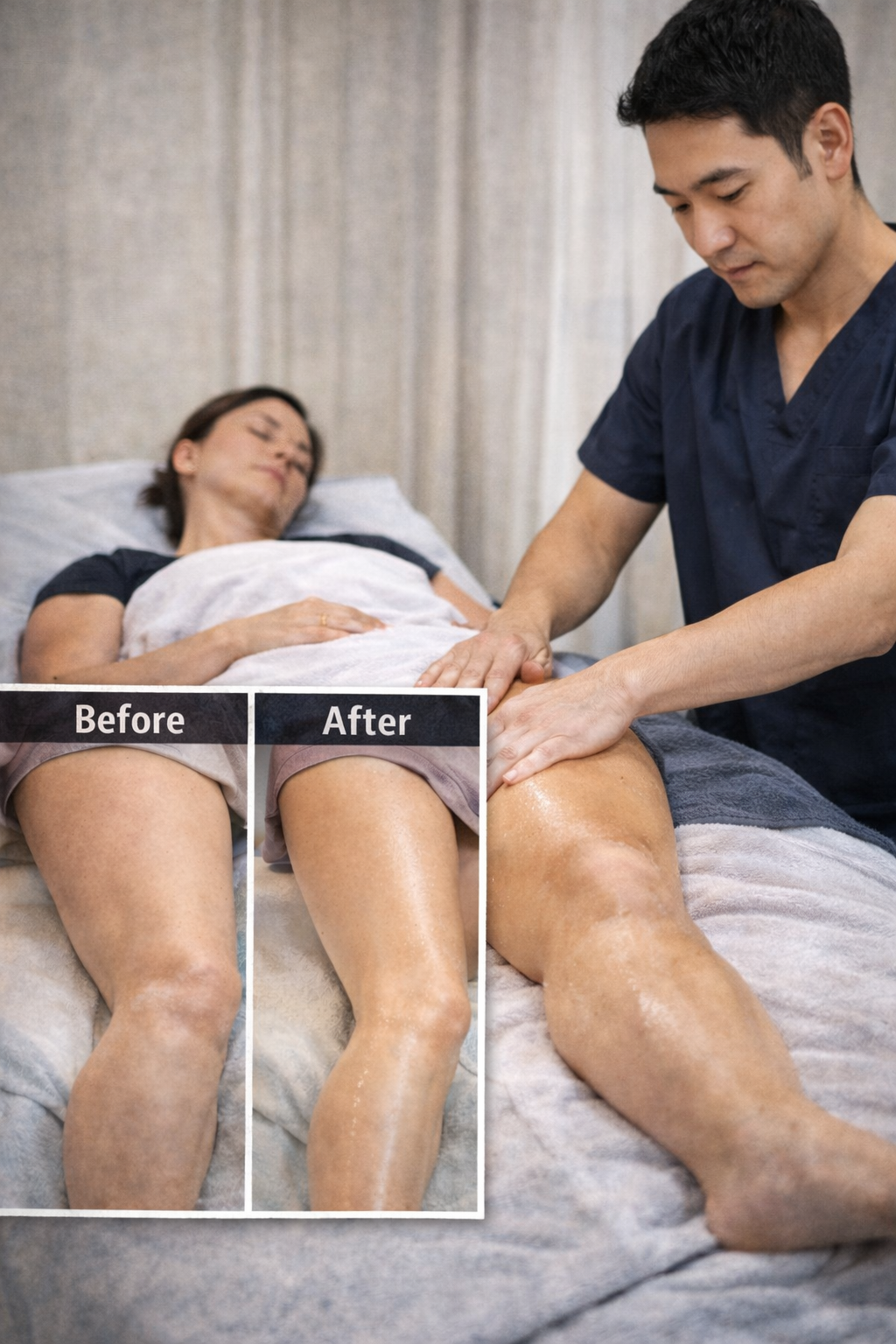
There are moments in clinic that genuinely frustrate me.
Not because a client asks the “wrong” question.
Not because someone wants to feel better in their body.
I get angry when people walk into K-Flow Therapy asking for Manual Lymphatic Drainage(MLD) purely for aesthetic reasons, not because they’re vain, but because that belief was planted in them by someone else.
Someone already sold them a story.
MLD Isn’t the Problem. How It’s Sold Is.
Let me be clear from the start.
I use MLD regularly in my clinical work.
I use it:
after surgery
when there’s lymphatic congestion
alongside soft tissue restriction
for recovery in athletes
when the tissue environment itself is overloaded and irritated
In those contexts, MLD can be an excellent tool.
But MLD was never designed to be a beauty treatment.
And it certainly wasn’t meant to be sold as a way to:
“remove toxins”
“melt fat”
“reshape limbs”
or permanently “de-bloat” a body part
That’s where my frustration starts.
“Drain” Where, Exactly?
One of the biggest misunderstandings around MLD is the word drain.
Lymphatic fluid doesn’t leave your body.
It doesn’t get flushed out.
It doesn’t disappear.
It moves through lymphatic vessels, passes through lymph nodes, and eventually returns to the bloodstream via the venous system.
So when someone claims they are “draining fluid out of your body”, the obvious question is:
“Where is it going?”
The answer is simple, It circulates. It returns. It redistributes.
Which means if nothing else changes - posture, movement, loading, compression, recovery habits - the fluid will often return to the same area within hours or days.
That’s not failure.
That’s physiology.
Why “Detox” Means Nothing Clinically
Another word that keeps showing up is detox.
Detox from what?
By what mechanism?
Measured how?
In clinical practice, detoxification is handled primarily by the liver, kidneys, lungs, and gut.
The lymphatic system plays an immune and transport role, not a magical cleansing one.
When “detox” isn’t defined, it becomes a marketing word.
And marketing words are easy to sell, but dangerous in healthcare.
The Difference Between Real Clinical Change and Visual Illusion
Here’s something important.
When MLD is used properly especially post-surgery or with true lymphatic congestion, the change I notice isn’t dramatic size reduction.
It’s this:
the tissue feels different under my hands
there’s less resistance
less pressure sensitivity
less “fullness” or density
movement feels smoother
recovery after activity improves
And patients feel that too.
That’s real.
That matters.
But that’s very different from saying, “Your legs are slimmer now.”
What many aesthetic-focused approaches are doing is creating short-term visual changes through fluid redistribution, then selling that as fat loss or body reshaping.
That’s not education.
That’s misrepresentation.
Why This Makes Me Angry
I don’t get angry at clients.
I get angry at the professionals who:
blur the line between fat and fluid
avoid correcting misunderstandings because it hurts sales
use before-and-after visuals without context
turn a clinical tool into a cosmetic illusion
Because then those clients come to me.
And suddenly I’m not just treating tissue, I’m dismantling expectations.
That shouldn’t be my job.
MLD Shouldn’t Be a Stand-Alone Product
Another uncomfortable truth:
On its own, MLD is rarely powerful.
It works best when combined with:
movement
breathing
soft tissue work
compression when appropriate
load management
recovery education
That’s why it never became a dominant stand-alone therapy in sports medicine or rehab.
It’s a supporting tool, not the main act.
And selling it as a miracle solution does more harm than good, not just to clients, but to the credibility of the profession.
What We Do Differently at K-Flow Therapy
At K-Flow Therapy, MLD is never offered as:
a slimming treatment
a detox session
a body-shaping service
It’s used when it makes physiological sense.
If your goal is aesthetic change, I’ll be honest with you. This probably isn’t what you’re looking for.
And that honesty matters more to me than an easy sale.
Final Thought
MLD is a valuable technique.
But it deserves to be respected, not marketed into myth.
My frustration doesn’t come from ego.
It comes from watching a good clinical tool be turned into a shortcut promise that it was never meant to fulfil.
And if that makes some people uncomfortable, that’s probably a sign this conversation needs to happen.
If you’re curious about MLD for recovery, post-surgical support, or managing genuine lymphatic congestion, I’m always happy to explain when it’s appropriate and when it isn’t.
Because real healthcare should reduce confusion, not sell it.
