
Pre-Season Isn’t a Race: It’s a Rebuild
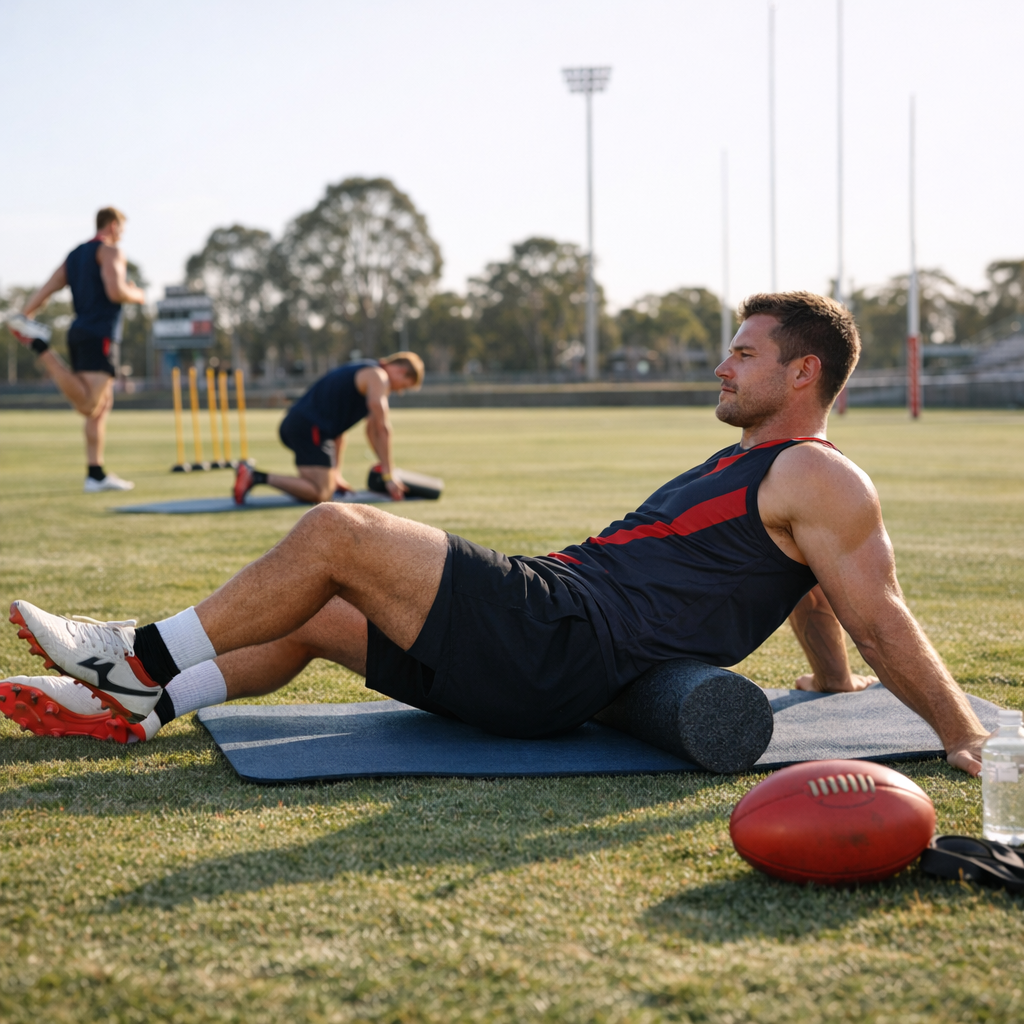
Pre-season has officially kicked off. After that long break from Christmas, players are back at training. You can feel it, there’s energy, there’s buzz, and there’s a whole lot of motivation in the room.
And yet… oddly enough, this is when K-Flow Therapy gets really busy. Not just because training loads increase, but because players come back with big intentions and bodies that aren’t actually ready for them.
“This season will be different.”
“I’ve got to make up for the time off.”
“Last year was okay, but this is the year I really step it up.”
All good intentions. All admirable. But from a physiological point of view, this period is one of the most high-risk windows of the year.
Two Common Returner Profiles
From what we see in the clinic, athletes who come back after a break tend to fall into one of two camps.
1. The ones who never really rested
They trained through the holidays. No games, but the workload didn’t let up. On the surface, they look tight and strong. But hands-on, it’s a different story: muscles feel hard, flat, and unresponsive. Stretching doesn’t help, it just tugs more tension. Ask about rest days and the usual reply is, “If I rest, I’ll lose fitness.”
But guess what the real issue usually is? It’s not the muscles, it’s the central nervous system. The body hasn’t had a chance to switch off and recover. Training without recovery is like driving a car on the redline, plenty of noise, no productive change.
2. The ones who barely trained at all
Then they come back and jump straight into full noise. Muscle strength might come back quickly, but ligaments, tendons and connective tissues do not adapt nearly as fast. Those structures only respond to actual time under load. Slam them with intensity before they’re ready, and complaints usually pop up in the tendons, ligaments or joints first.
Same Pathway, Same Problem
In both scenarios, the pattern repeats:
Unprepared body + too much stimulus too fast = overuse, pain, dysfunction.
Early pre-season injuries aren’t a sign of “treatment failure.” They’re a sign that the system, recovery planning, was missing in the training design.
The reality is simple: training doesn’t make you stronger, recovery does.
Training creates stress. Recovery creates adaptation.
That’s why this time of year, the off-season and early pre-season, is unique. It’s one of the only periods where rest days and lighter weeks can be scheduled without competition pressure stacked on top. It’s not weakness to dial intensity down. It’s preparation.
In field sports and high-intensity codes, performance doesn’t usually drop because muscle gives up first, it drops because the nervous system gets overloaded. When the CNS is cooked, strength can still be there, but timing slips, reactions dull and everything feels like it’s “stuck on.” Clinically, that’s what we feel when muscles are hard, flat and lacking spring.
And what happens if you respond to that with more training or more aggressive treatment? The body doesn’t learn to perform, it learns to defend.
Bye Weeks Are Not Bonus Load Weeks
Think about AFL bye weeks exactly the same way. They’re not just “free time” in the calendar, they’re a structural opportunity to breathe. But they only work if they’re treated like that.
By mid-season, neural fatigue, not muscular fatigue, is often the bigger limiter. If a bye week becomes a make-up load week or a test block, it stops being recovery. It just rearranges stress.
This was clear in how some clubs managed their mid-season breaks last year, the issue wasn’t whether players rested, but how they rested.
Rest Doesn’t Mean Falling Behind
Athletes often feel guilty about resting.
“If I take a day off I’ll lose fitness.”
“If I feel tired, it must mean I’m not ready.”
Fatigue and pain aren’t weakness. They’re information.
Tough athletes aren’t always the ones who push through. They’re the ones who know when to pull back so they can go hard later.
The season is long. And life is longer. And you only get one body.
This pre-season shouldn’t be about who can endure the most, it should be about rebuilding bodies that can last the longest.
